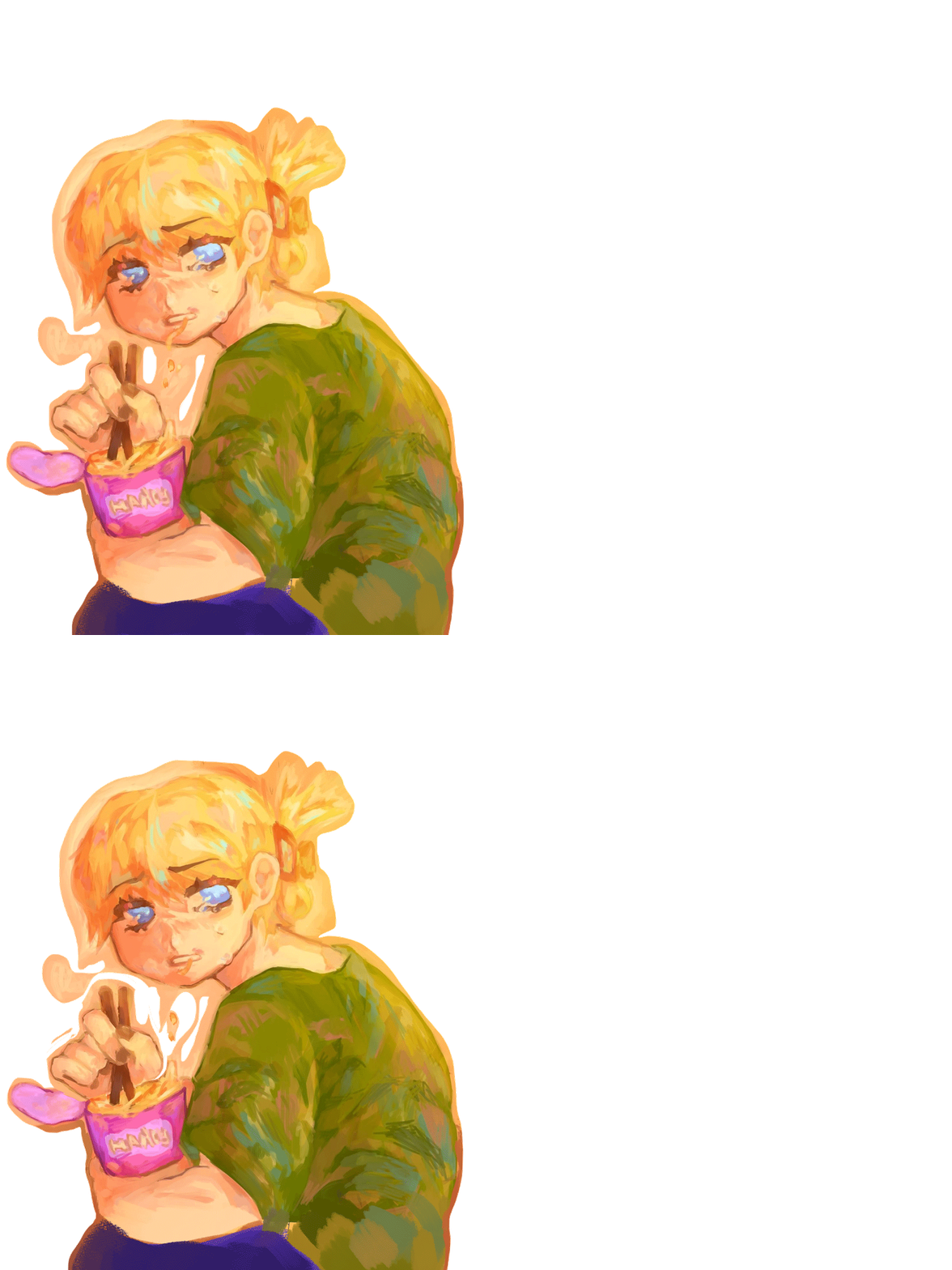
This is my first ever panel created in Processing.
Kill the Pig
Two linked studio projects on gaze, my identity, and code for AFVS 97: Sophomore Tutorial.
Theme: A view of my world
Chapter 1: A pig's death
I cannot see the world
The world is seeing what I cannot see
What I cannot see is seeing the world.
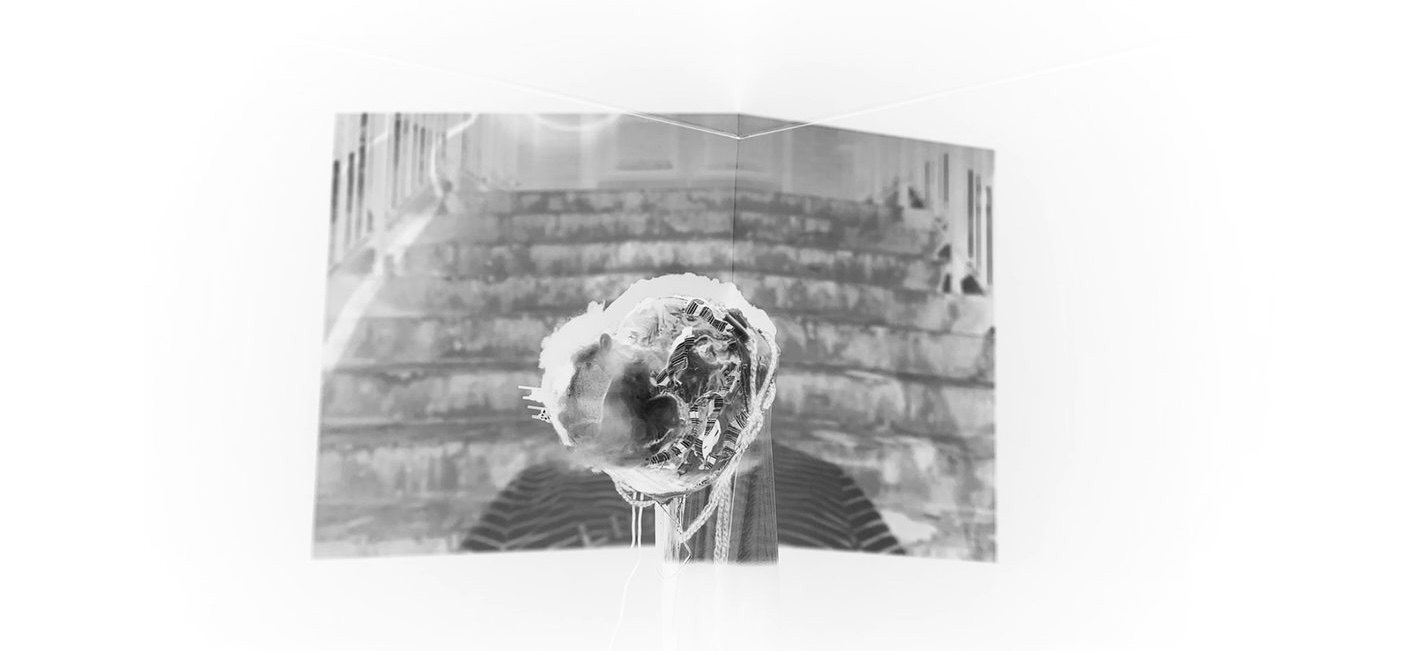
I have always been interested in the general themes of rebirth, death, gaze, and the grotesque, and the intertwining play of execution. This project set out to be more personal and exploratory as I tried to grasp all of my past identities, beliefs, and hobbies and put them on display like a public execution — I was called a pig (non-offensively)
There are two big sections of this piece: the head and the projection.
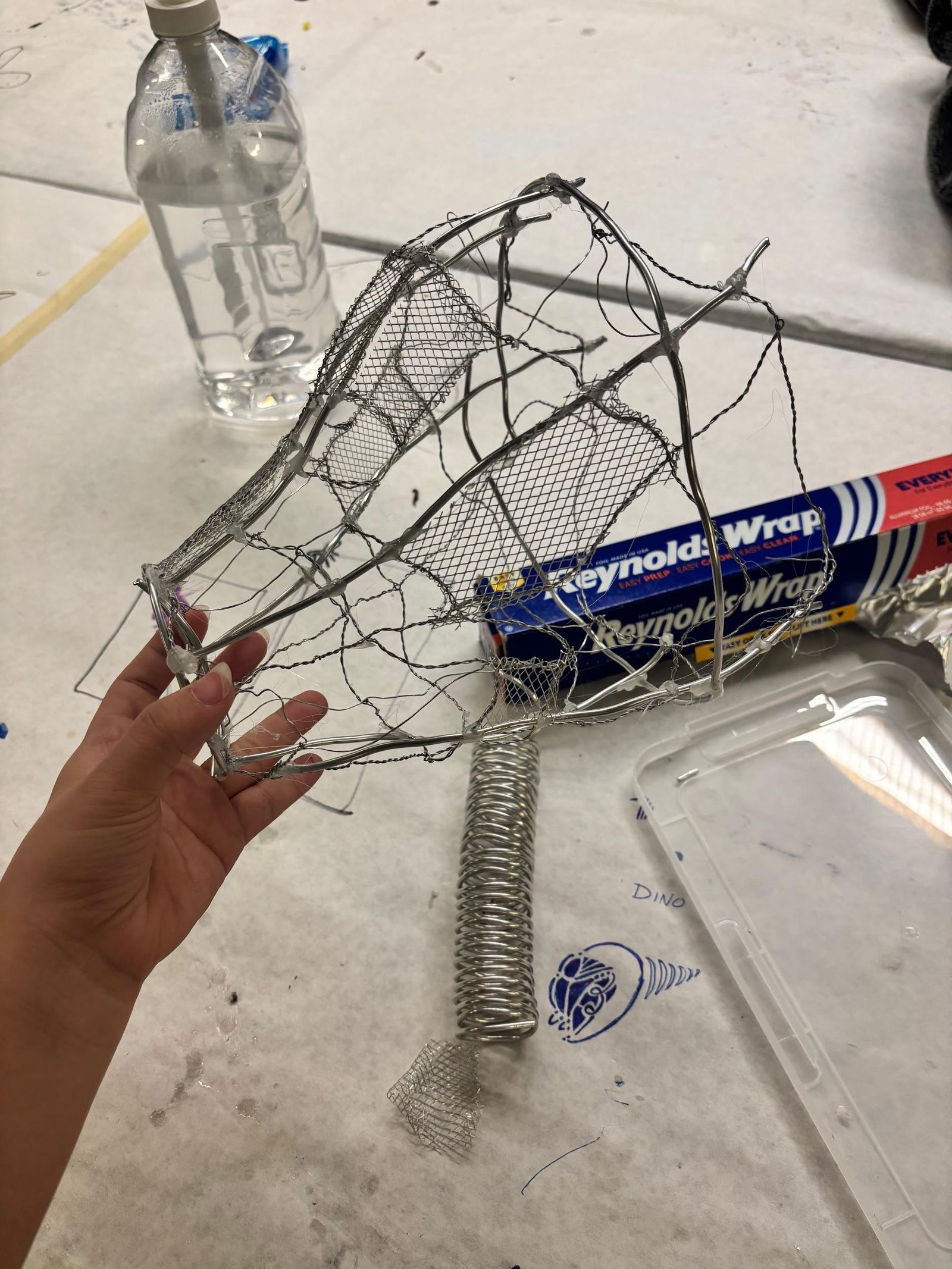
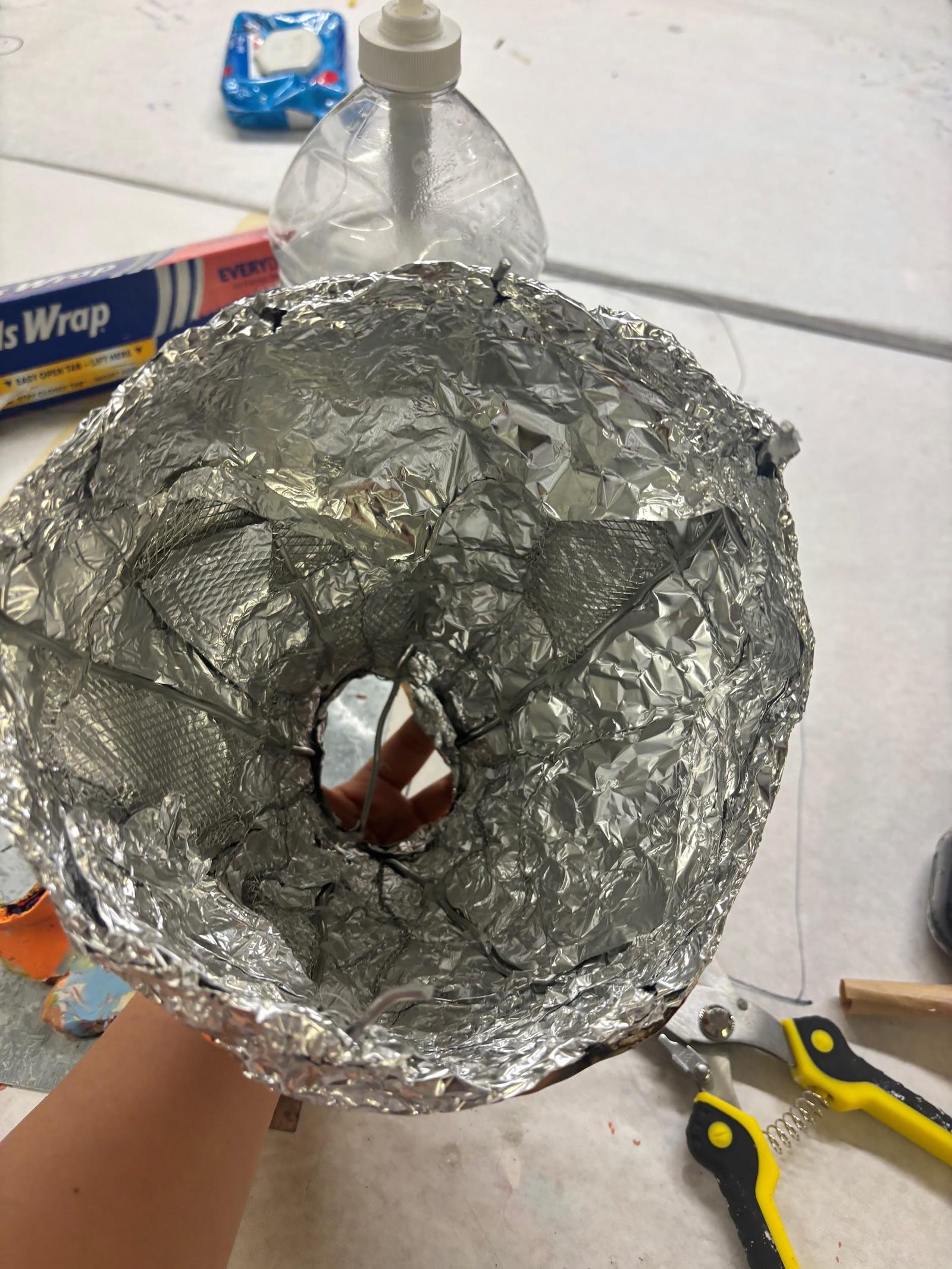
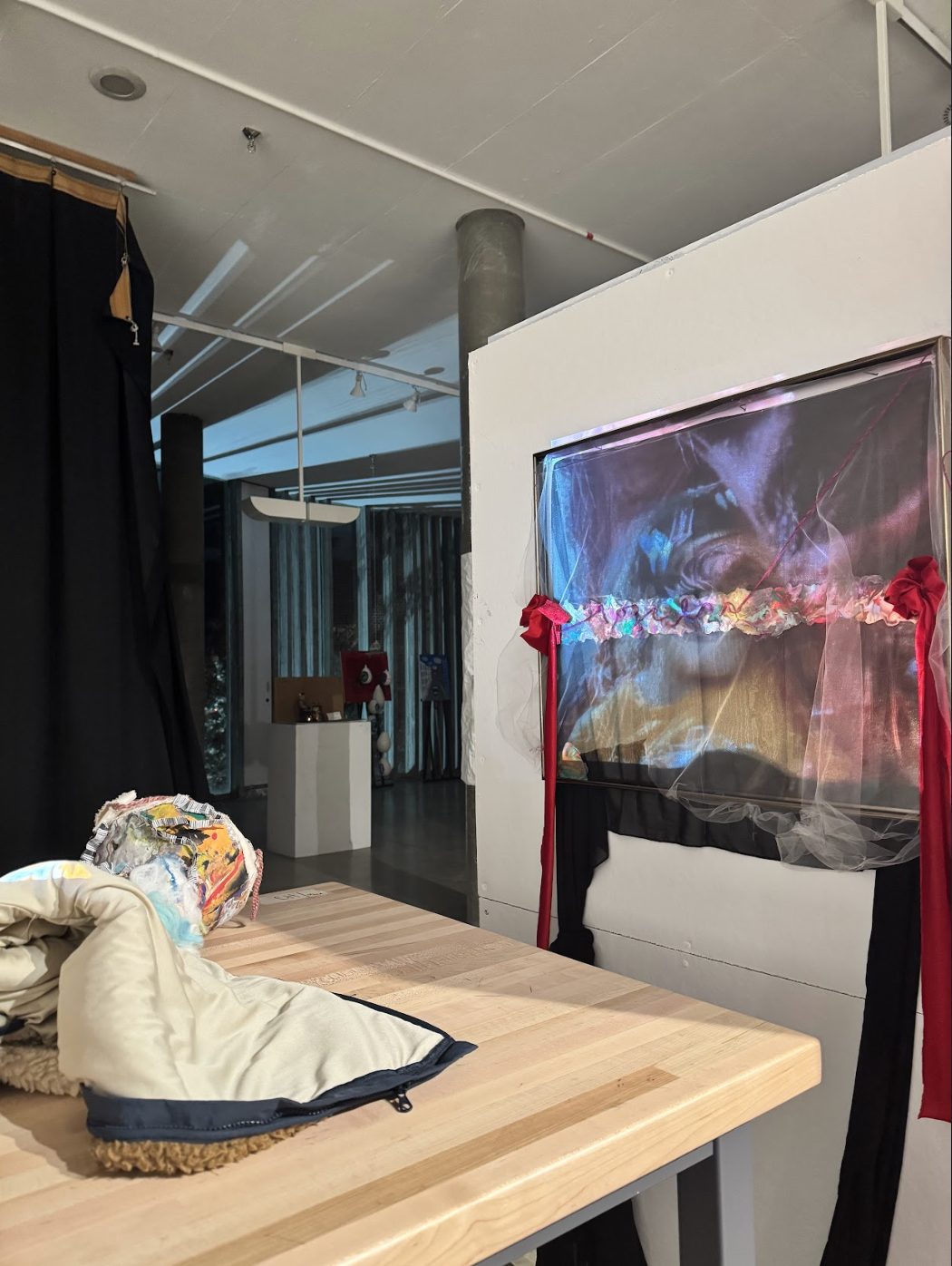
Snapshots of the pig's head in progress — wireframe, foil, then paint and discarded materials.
I started out very interested in performance art and the uncanny, almost anonymously voyeuristic feeling of public execution. Attacking the theme of a view of not my world taught me a lot about logistics and physics to build a back-facing headpiece, which naturally led to my decision not to use the sculpture on a moving body. Going into this project either without any expectation or with too ambitious ones, I learned to navigate the trade-offs between a medium and its implied values — there were times I didn't like how a medium turned out and had to reverse-engineer everything.
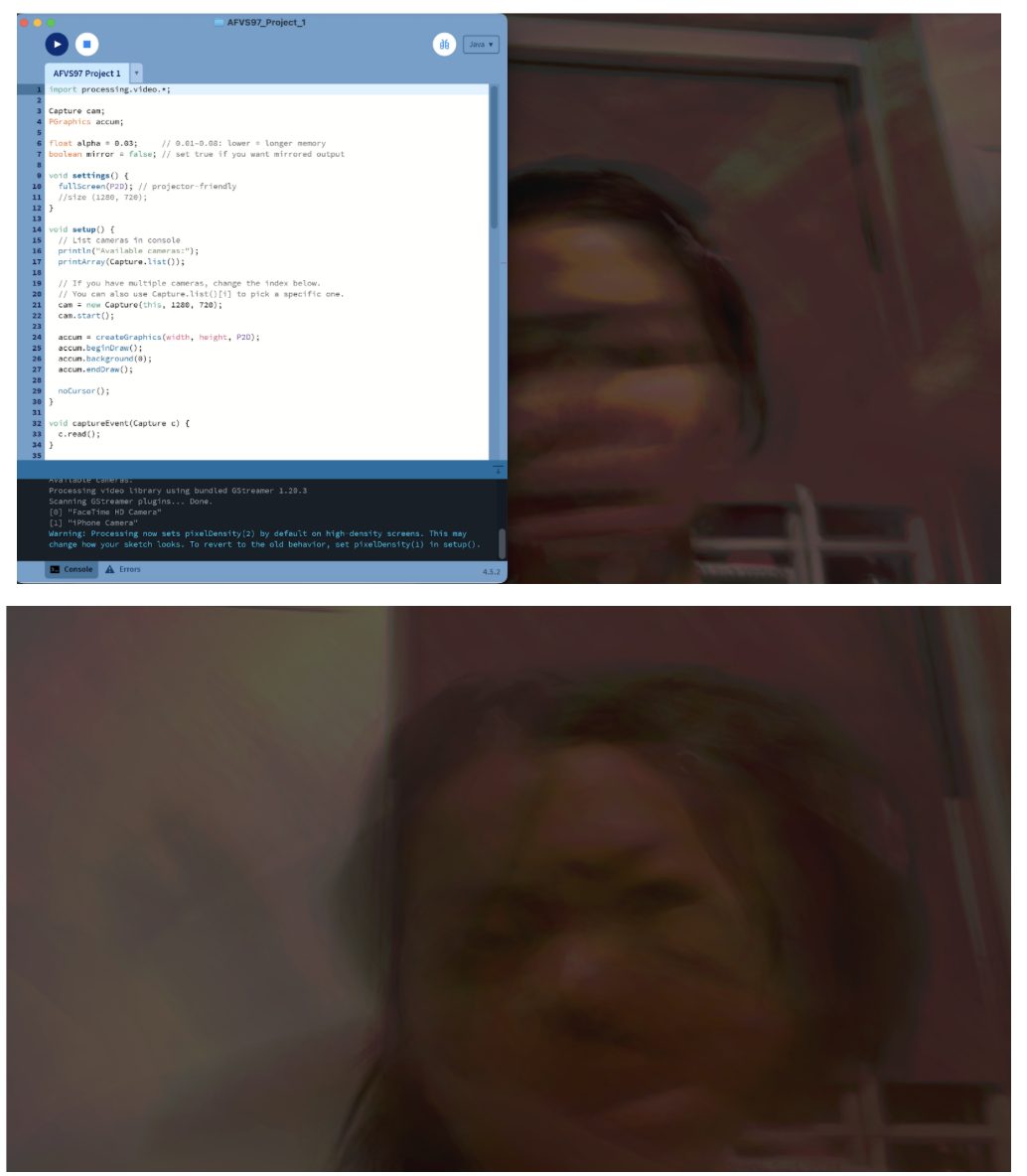
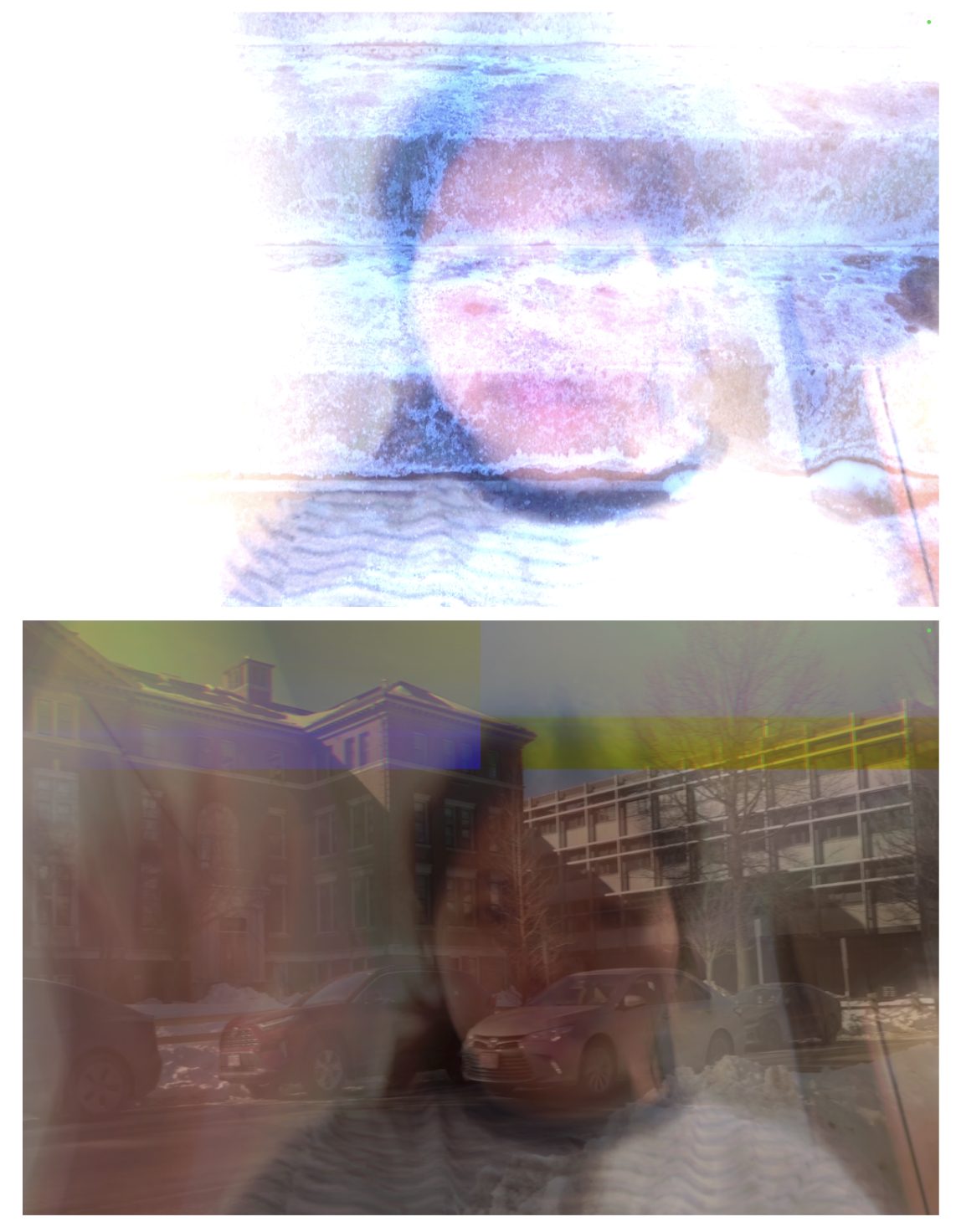
Draft code → actual projection.
I actually regretted that this project couldn't be exhibited as a moving piece — not for technical reasons, but because I couldn't figure out how to keep it stable on a moving body, and a lot of the head's components were wobbly enough to fall off mid-motion. A more visual-striking, moving sculpture is my biggest "what if" for this piece — though it would have lost the layer of altered reality and identity reconstruction that only works as a static projected sculpture.
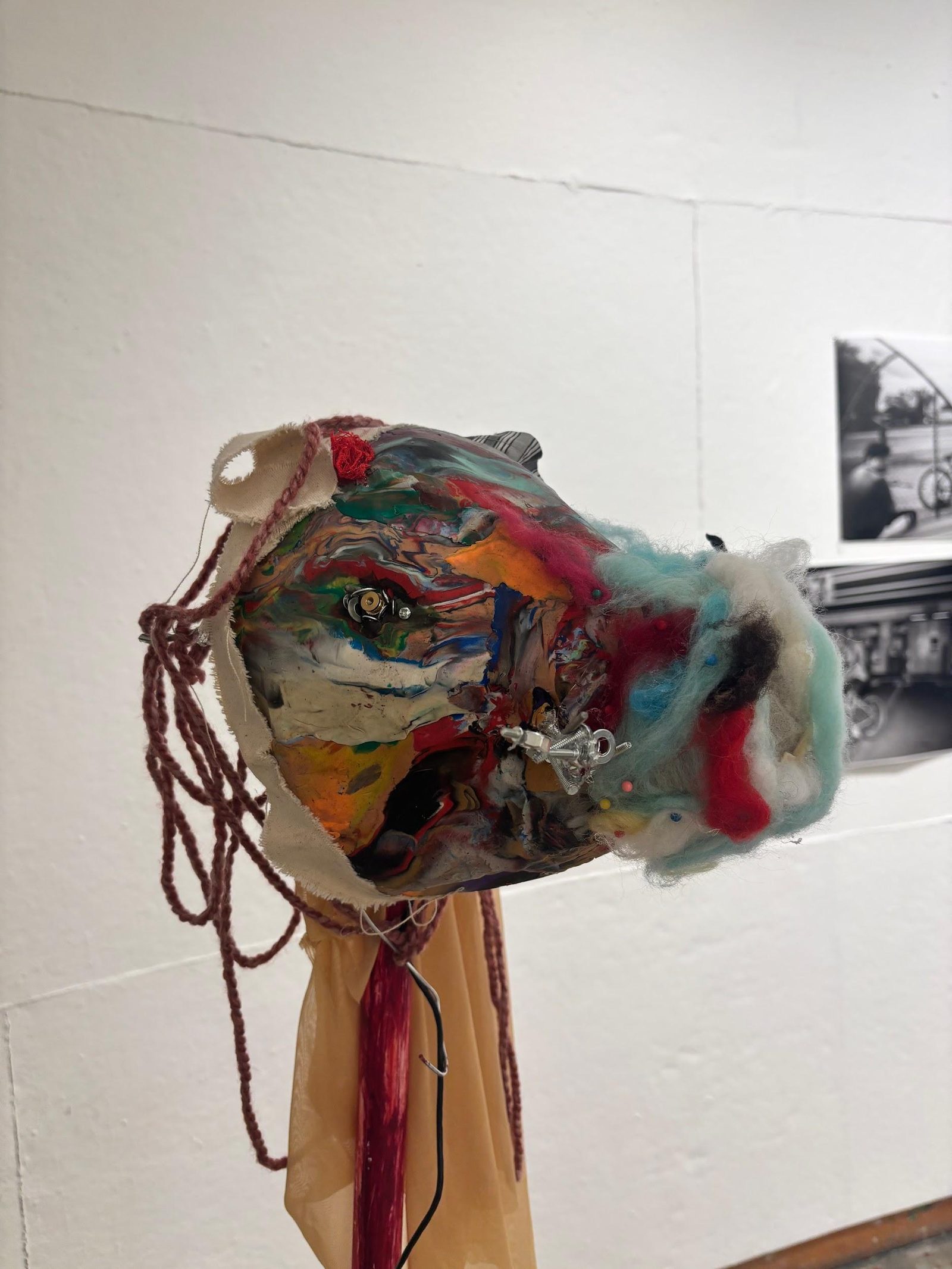
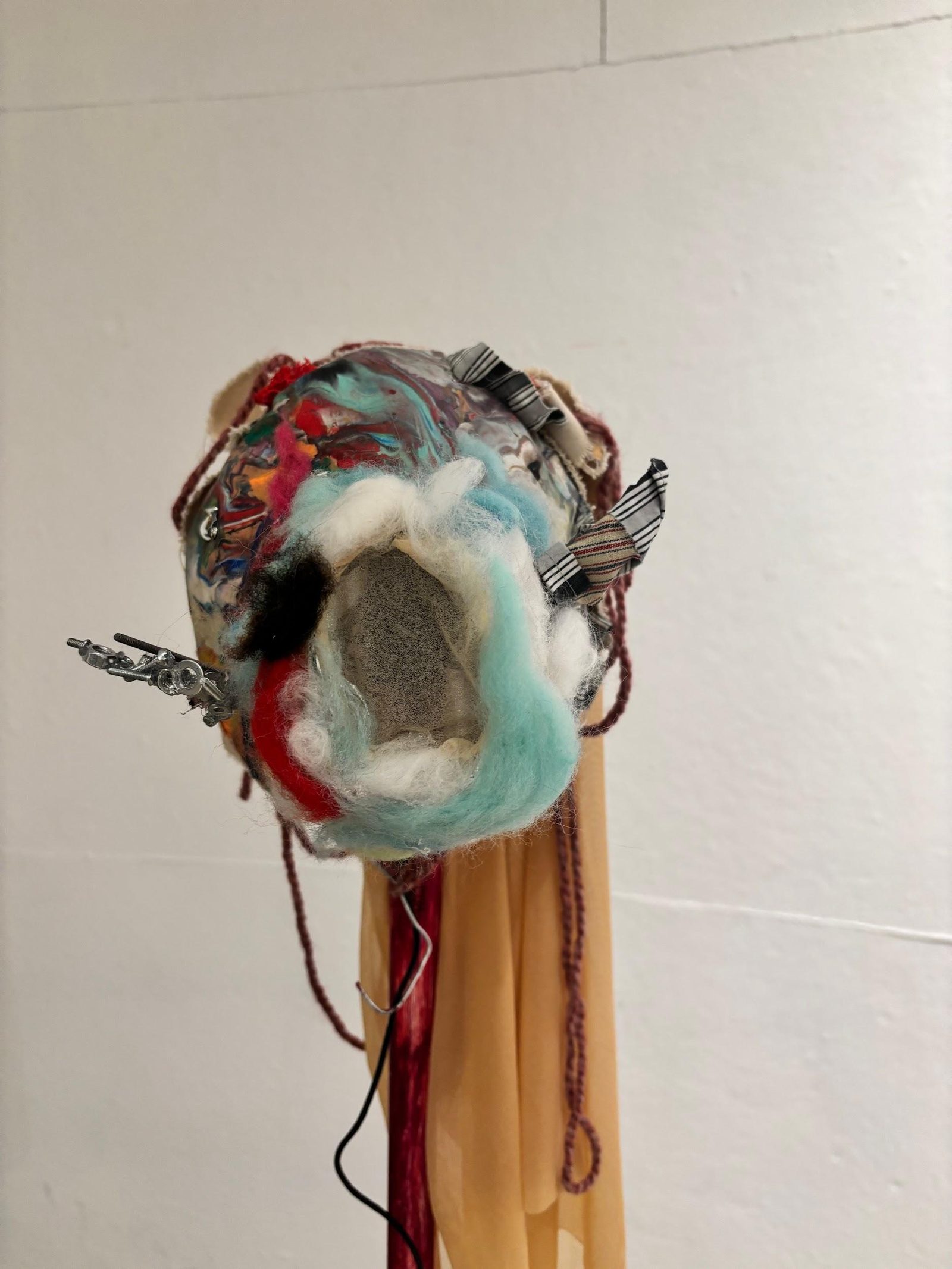

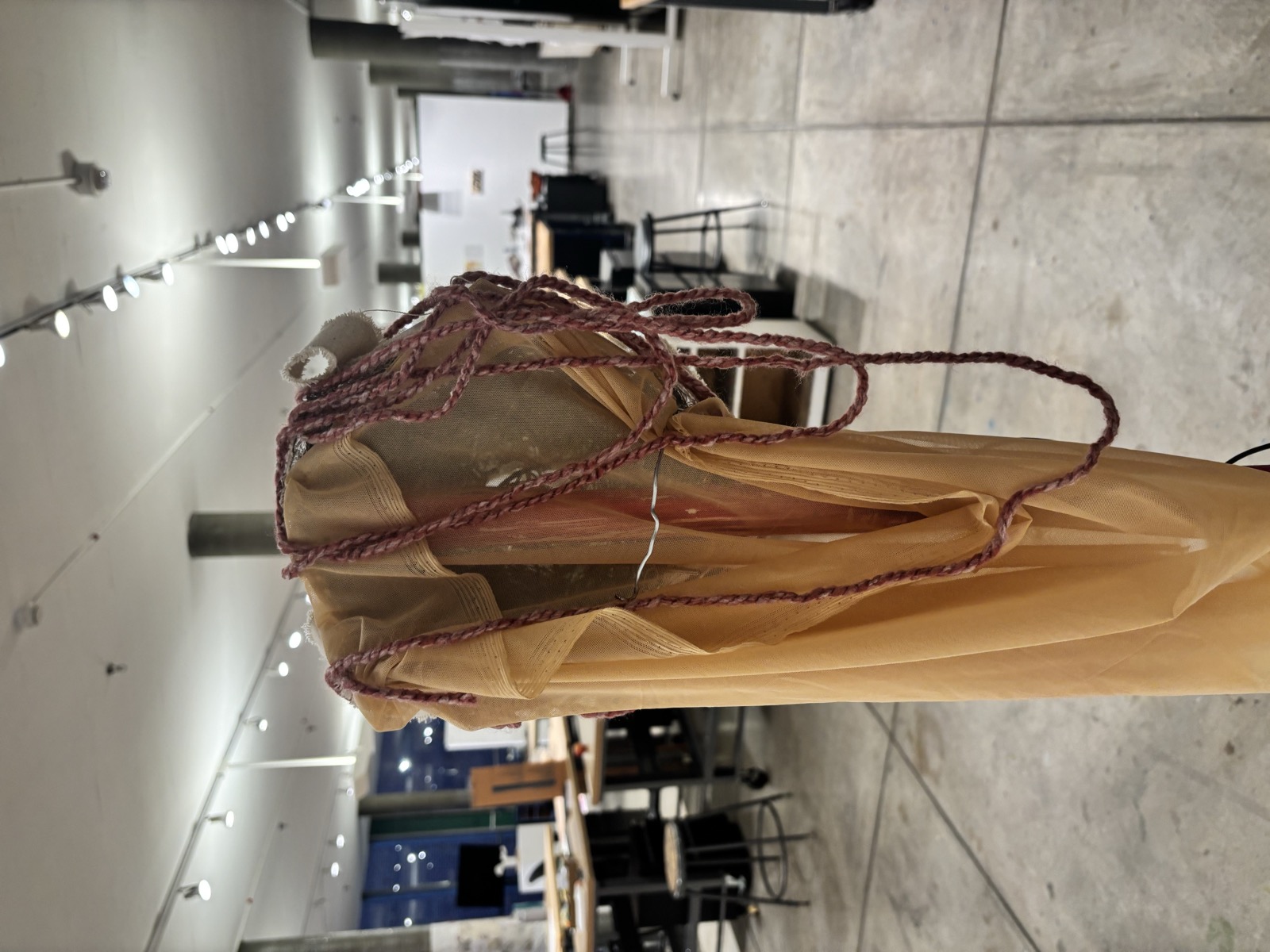
360° sculpture at studio.
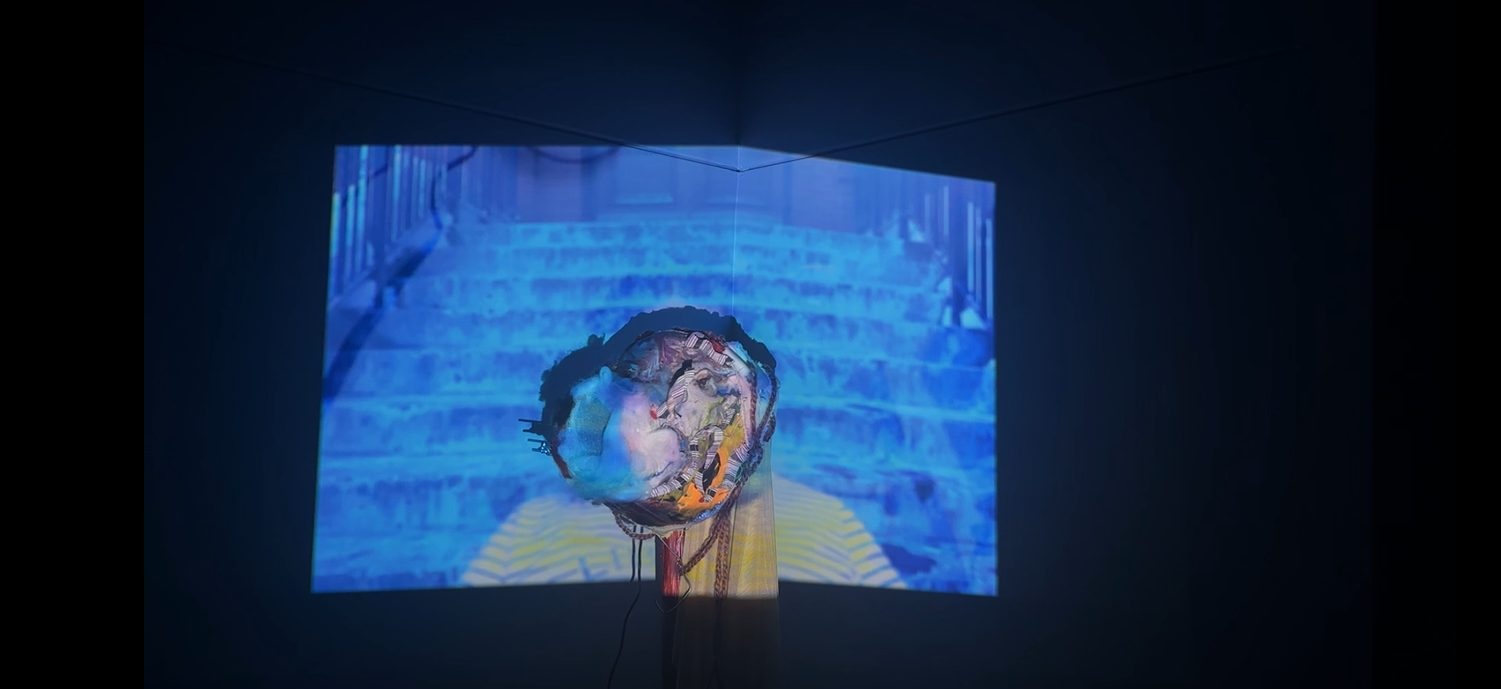
Sculpture at home with projection.
Theme: WhaT iF
Chapter 2: A pig's funeral
I can see the world
The world is seeing me not me being me
What I cannot see is between me and the world.
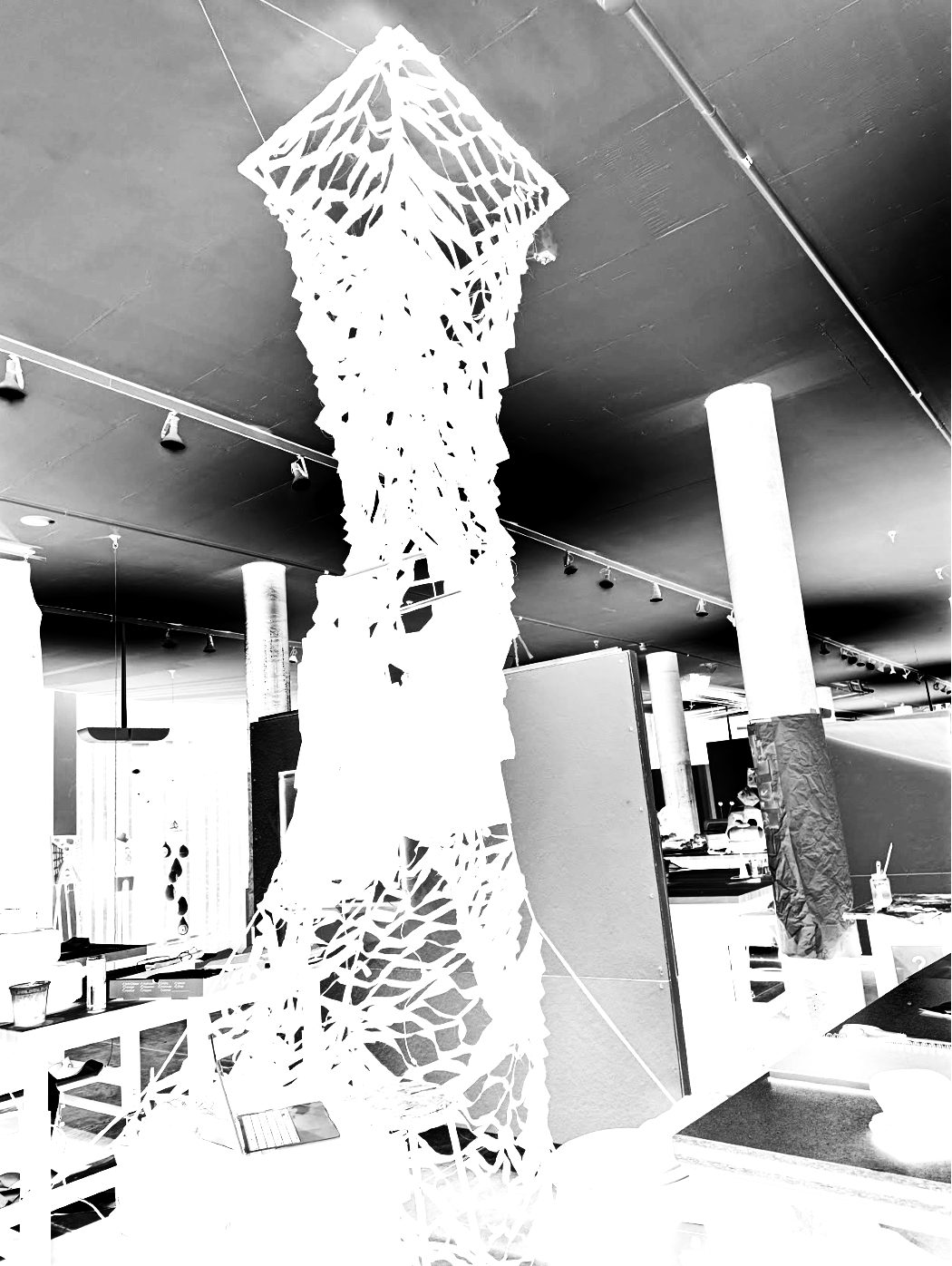
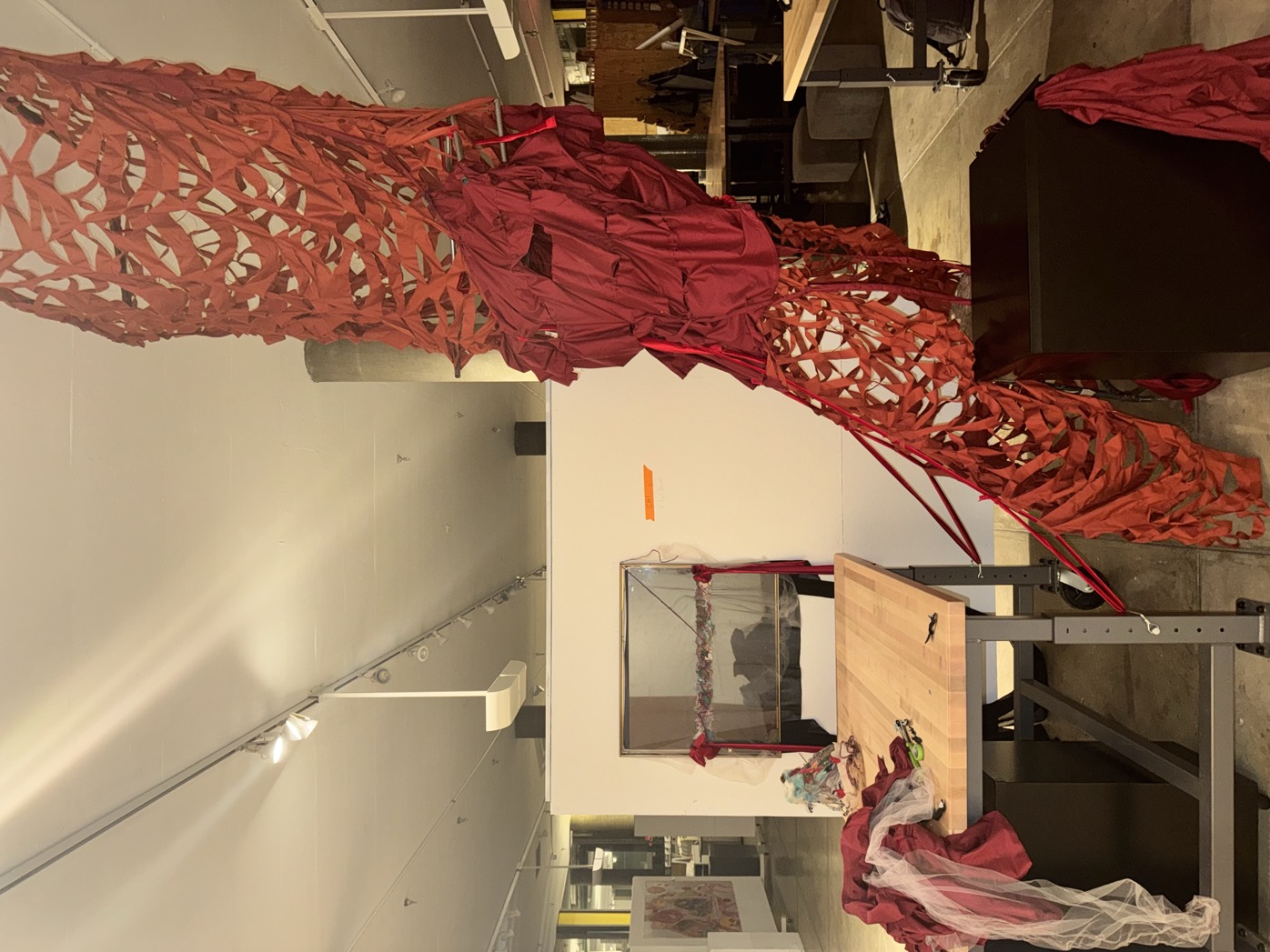
This project is guided by an ongoing question that began in A Pig's Death: what does it mean to be seen? What is an unstable gaze, a partial gaze, or an absent gaze? For this second project, I expanded that into a spatial and participatory system — building an enclosed booth that separates the viewer (outside) from the viewed (inside), using red fabric, netting, and a suspended structure that references both a body and an interior organ. I let the material stay visibly constructed and unstable, embracing the "wobbly," fragmented quality I'd previously resisted.
The installation runs through three states: when someone is inside the booth looking, when they're inside but not looking, and when the booth is empty.
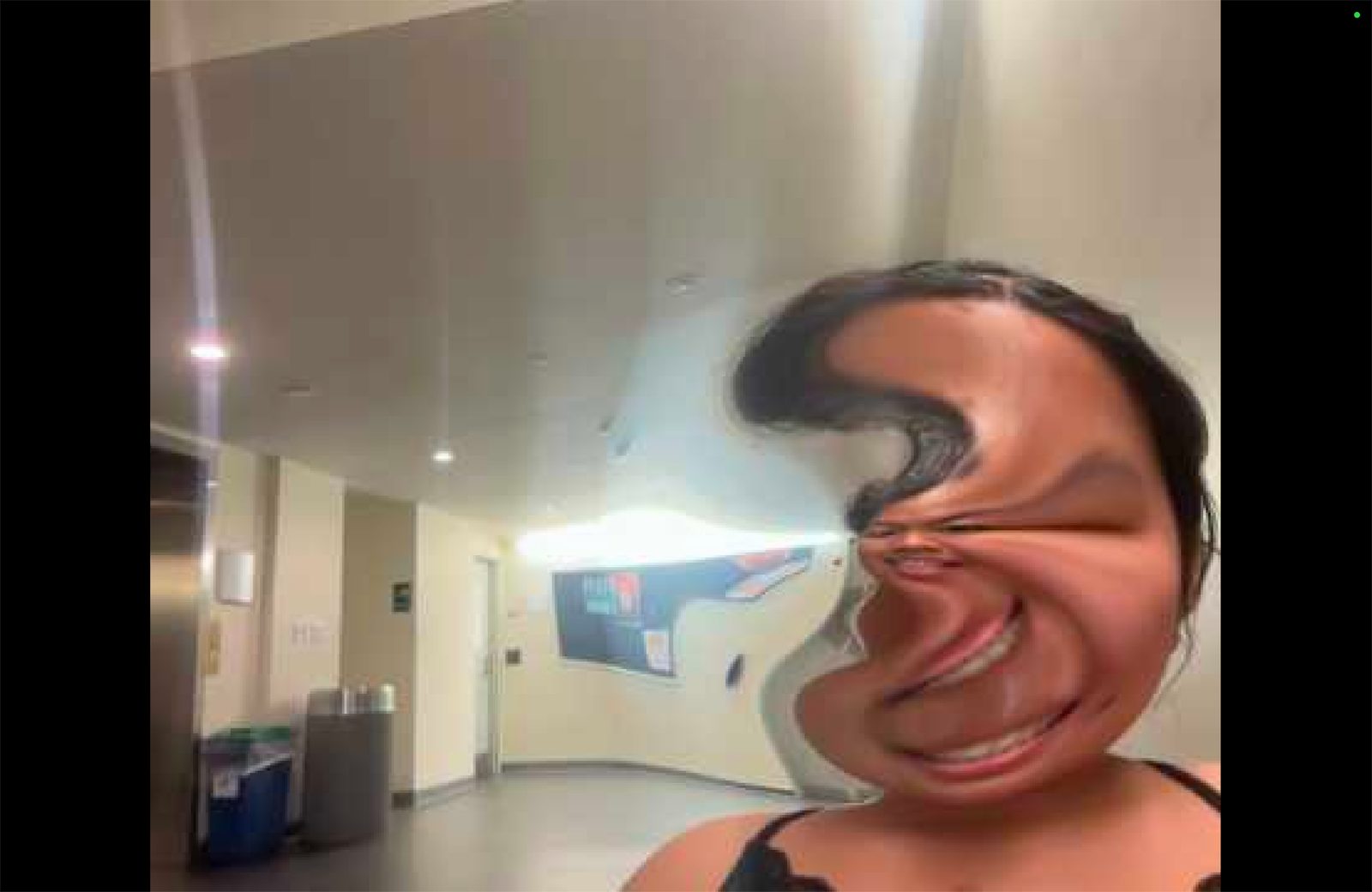
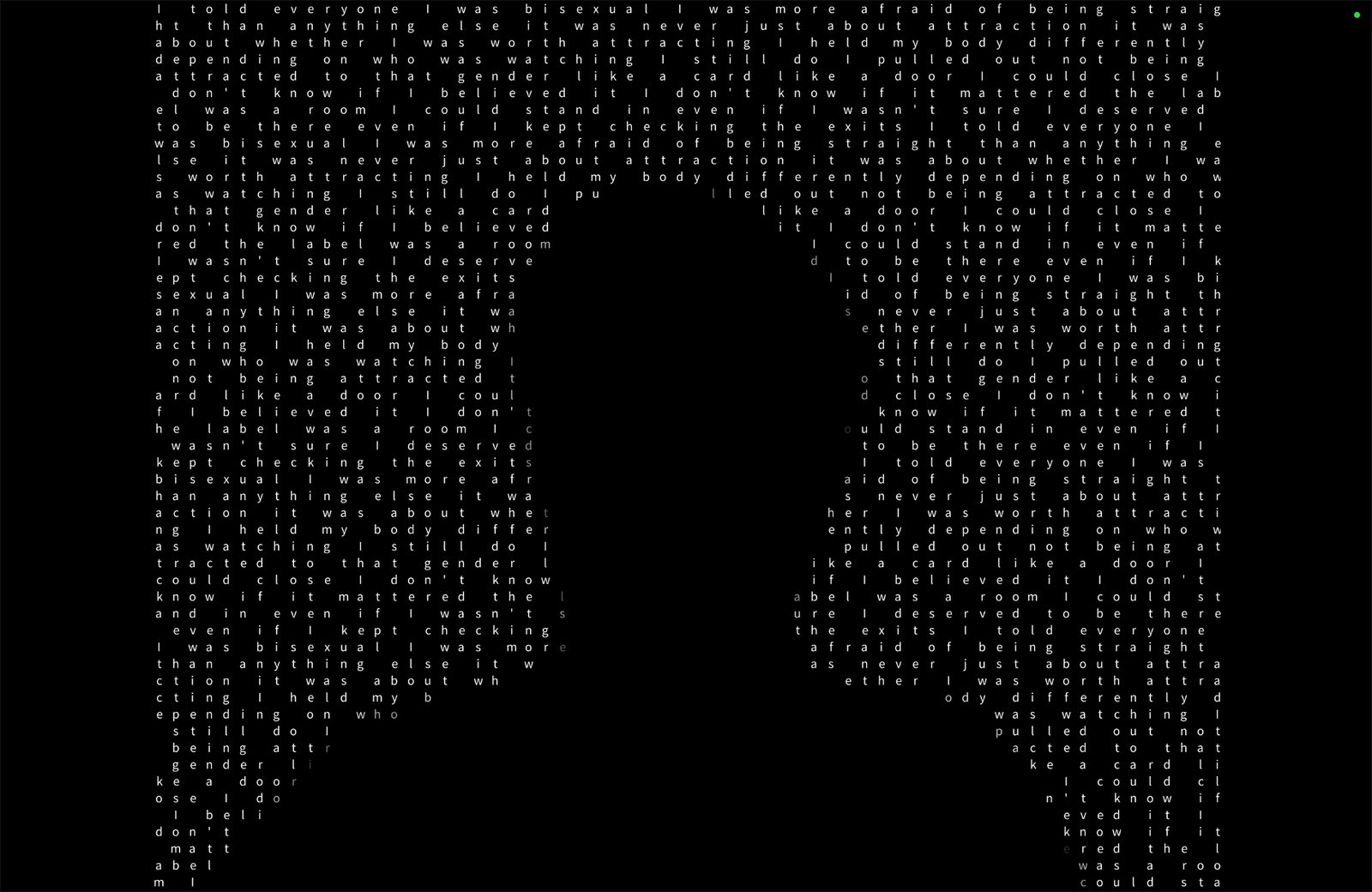
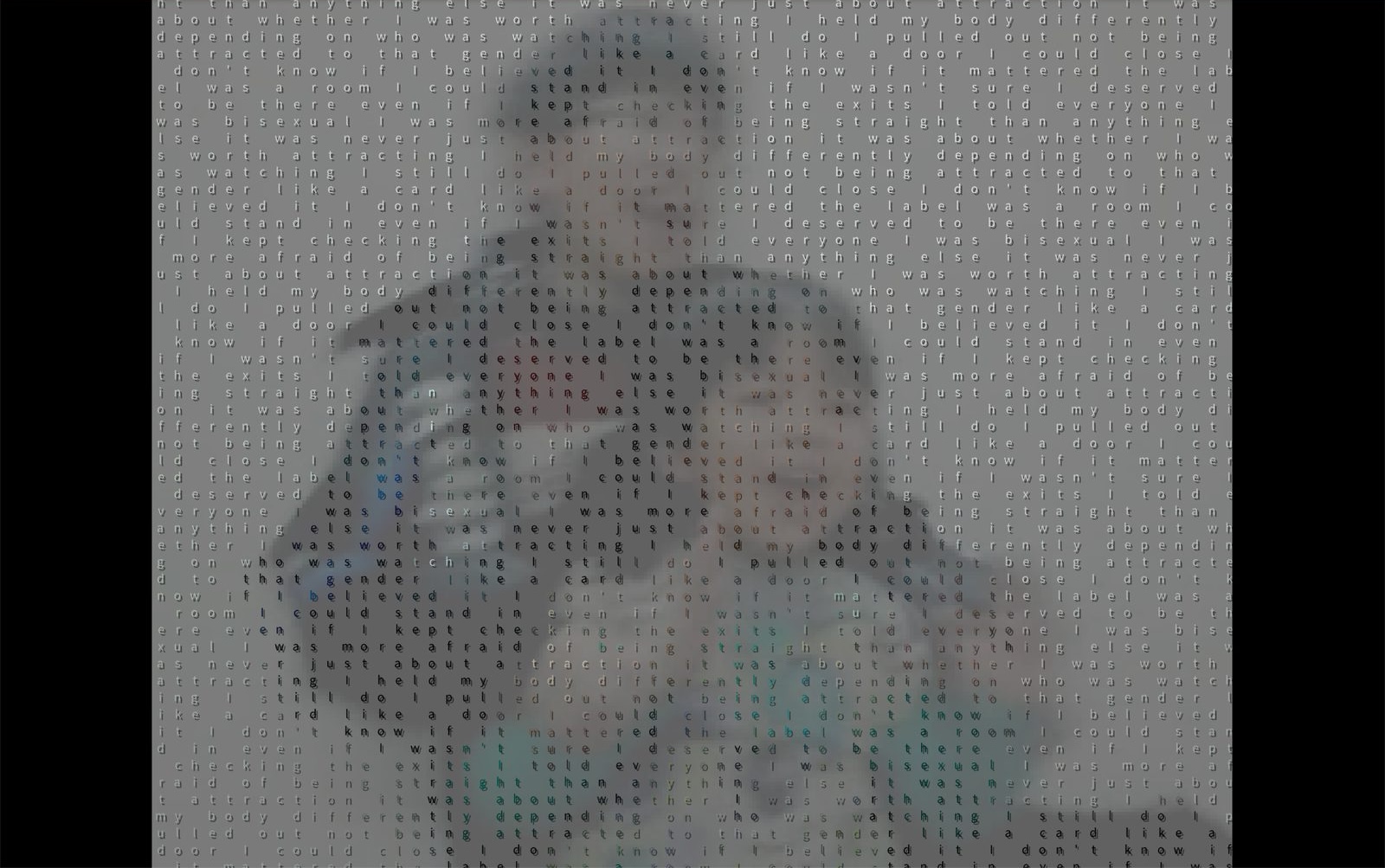
Experiment with the code (Python + Processing) in another space — the booth's three states.
Early experiments focused on facial tracking and distortion, similar to the projection in the pig's head, but simply distorting the face felt too literal. A key shift happened when I tested what occurs when no eyes are detected — that became the second state, where the body dissolves into a negative space filled with text from my queer diaries. Closing my eyes meant seeing neither myself nor any color, so I leaned into the inner thoughts instead, translating them into text so identity could be replaced with memory and interiority. The third state, when no one is present, extends the first project's "what if" about autonomy — the system keeps running as a kind of memory capsule, suggesting identity persists even without a viewer.
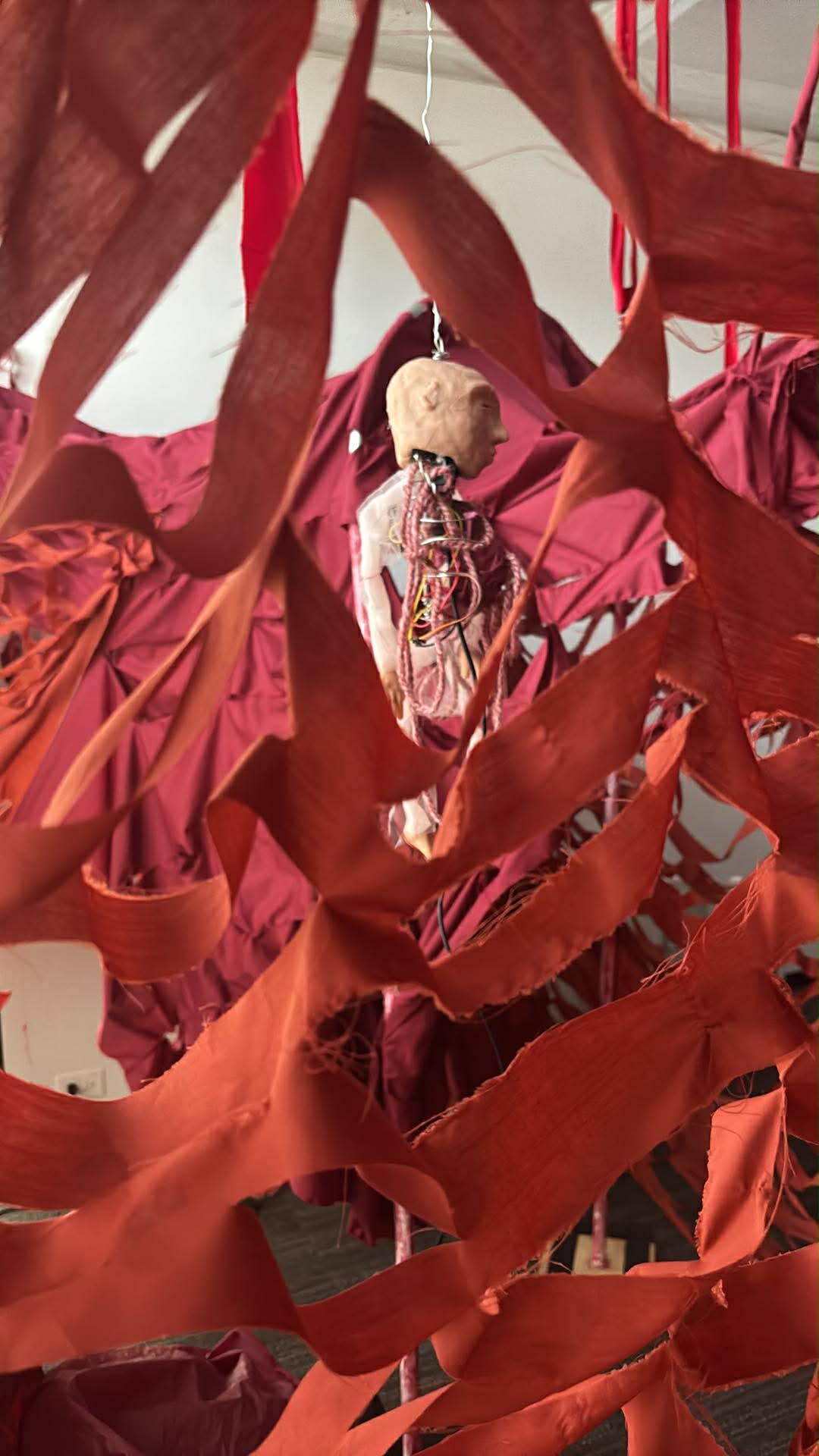
One of the most important developments was the booth itself. What started as a neutral, mechanically difficult photo booth turned into a womb-like structure, referencing gynecological imagery and the idea of the gaze as a forceful birth. Its openings invite outside viewers to look in, yet the orientation of the viewed's posture prevents any direct eye contact — the same misalignment I explored in A Pig's Death. The pig's head, reframed within a "funeral," becomes both a remnant and a continuation, linking death to distortion to a sense of rebirth.
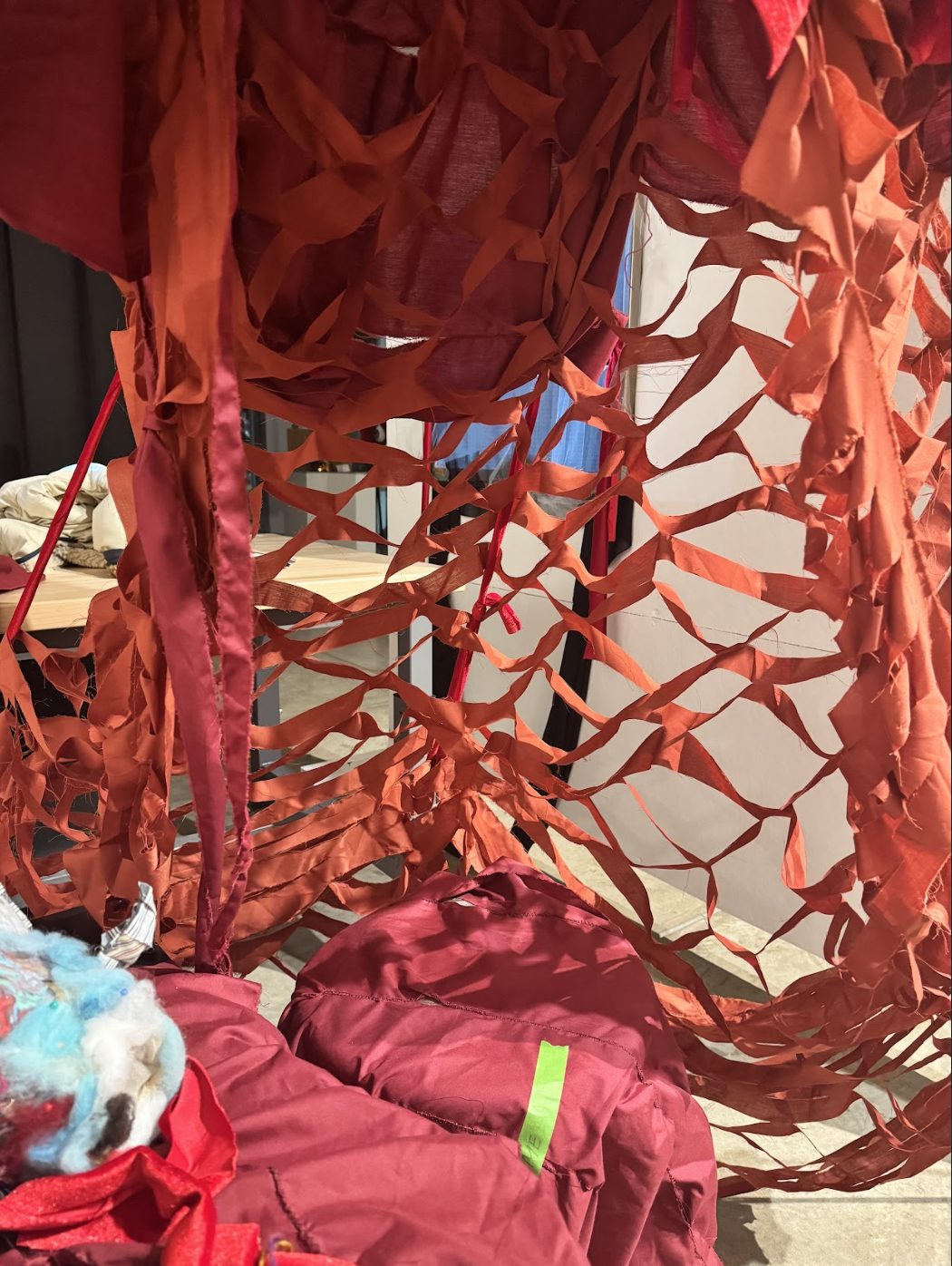
Position of the projected frame vs. the booth.
I'm still questioning whether the work invites genuine self-reflection, or if the mix of overstimulating elements overrides that possibility — a tension between being seen, seeing oneself, and existing without either, and a question of the gaze's technological moment now versus what it becomes further down the human timeline.
Light mode vs. dark mode.
There is claustrophobia represented by a confined tunnel that you cannot see through right away, and you have to trust us to lead you through it. It is short but small and messy, and you have no choice but to move forward.
Then there is morbid curiosity. The tunnel's fabric walls are not see-through, but they are full of holes, and you might find yourself wanting to peek through them. The sound pulls you in and so does the light, and if you do look, you will find our doll with its beating heart, plastic head, metal ribcage, and velvet intestines. It is not a particularly pleasant thing to see, and the redness of everything carries an intensity that evokes a sense of gore no one should reasonably enjoy. But then the heartbeat is somehow soothing, and the doll's face is not quite scary, so you might want to look again and study it more carefully. You can use your fingers to stretch the fabric and look at the doll more closely, or take a few more steps along the tunnel to find a different angle.
All gaze is unneutral;
It is almost like we were sneaky onlookers of something we are not privy to, but the mental and physical journey to exempt ourselves from looking (by just leaving the room straight ahead) is also challenging.